
Why Your Omega-3 Might Not Be Working (And Could Even Be Making Things Worse)
May 15, 2026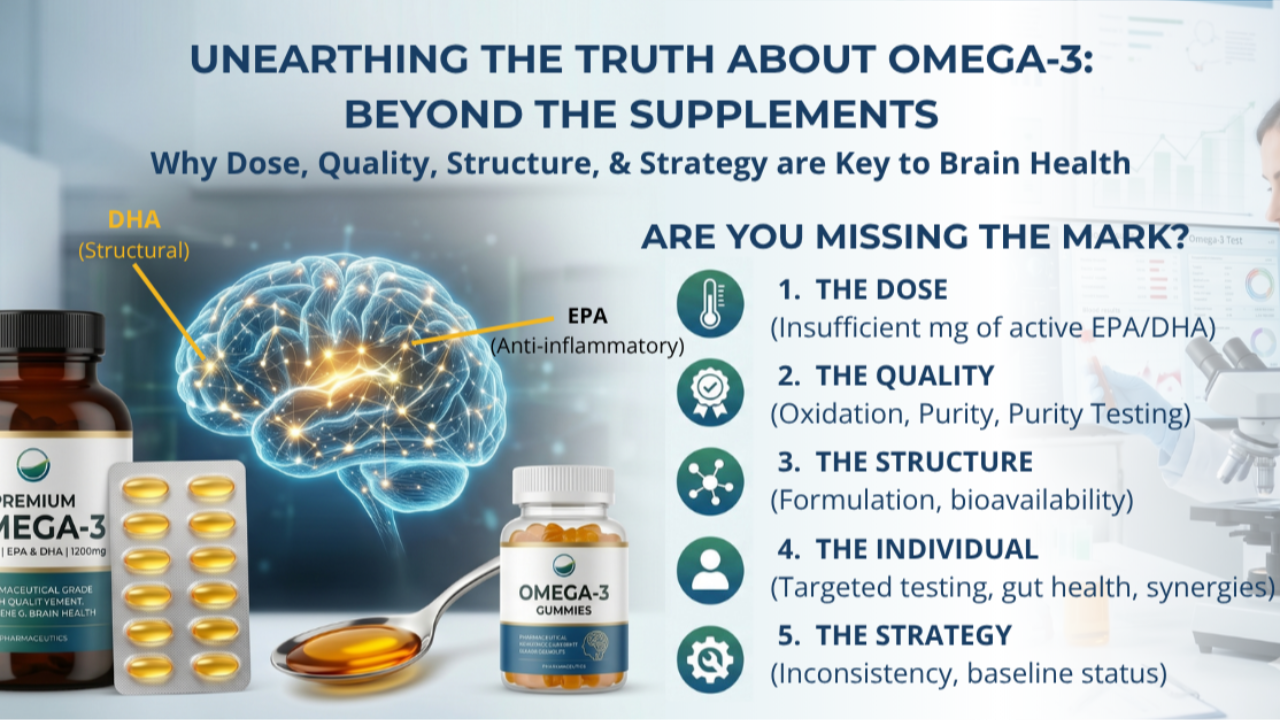
There’s a sentence I hear surprisingly often:
“I tried Omega-3, but it didn’t do anything”
And every time I hear it, I find myself thinking the same thing:
The problem is rarely the Omega-3 itself
More often, the issue is:
-
the dose
-
the quality
-
the formulation
-
the consistency
-
or the fact the supplement simply doesn’t match the individual taking it
This is one of the biggest problems in modern health optimisation. People hear something is “good for the brain,” buy the cheapest version available, take it inconsistently for a few weeks, notice no dramatic change… and conclude it doesn’t work.
But brain health doesn’t work like that. I’ve seen people spend hundreds of pounds on supplements that were either under-dosed, poor quality, inappropriate for their biology, or simply targeting the wrong problem entirely
Omega-3 is not “one thing”
When most people say “Omega-3,” they are usually referring to two key fatty acids:
-
EPA (Eicosapentaenoic Acid) - generally more anti-inflammatory
-
DHA (Docosahexaenoic Acid) - the major structural fat within the brain itself
And DHA matters enormously. It influences:
-
neuronal membrane integrity
-
signalling between brain cells
-
cognitive performance
-
brain perfusion
-
resilience under stress
In many ways, DHA is part of the physical architecture of the brain. Yet many supplements marketed as “Omega-3” contain surprisingly low levels of active EPA and DHA.
Research suggests meaningful cognitive effects are more likely when supplementation reaches around 1000–2500mg/day of combined EPA and DHA, particularly in individuals with low baseline Omega-3 status.
Many over-the-counter products contain only a fraction of that. Which means some people are effectively taking nutritional “placebos” and wondering why nothing changes.
Quality matters far more than most people realise
This is the other major issue. Not all supplements are created equally. Some lower-quality products:
-
oxidise easily
-
contain contaminants
-
use poorly absorbed forms
-
contain insufficient active ingredients
-
rely on cheap filler oils
And ironically, some products marketed for “brain health” may actually increase oxidative stress rather than reduce it. That’s the uncomfortable reality of an under-regulated supplement industry.
Which means blindly taking supplements without understanding:
-
formulation
-
purity
-
bioavailability
-
therapeutic dosing
…can quickly become an expensive exercise in disappointment.
The brain does not work in isolation
This is the piece many people miss entirely. Omega-3 does not operate independently of the rest of the system. Brain function is influenced by:
-
inflammation
-
methylation
-
gut health
-
nutrient transport
-
mitochondrial function
-
blood flow
-
stress physiology
-
sleep quality
-
hormonal status
Which is why two people can take the exact same supplement and have completely different outcomes.
It’s also why combining Omega-3 with the correct forms of nutrients such as B12 and folate can significantly influence results in some individuals, particularly where homocysteine or cognitive symptoms are involved.
Again, this comes back to understanding the person. Not simply the product.
Your baseline matters more than the internet
One of the biggest flaws in supplementation culture is the assumption that everyone benefits equally from the same intervention.
They don’t.
If someone already has adequate Omega-3 status, supplementation may produce little noticeable change. But in someone with:
-
low Omega-3 levels
-
inflammatory issues
-
poor diet quality
-
cognitive strain
-
chronic stress
…the impact can be substantial. This is why testing, symptom analysis and understanding the wider clinical picture matter. Not guesswork.
The bigger issue isn’t Omega-3
It’s our relationship with health itself. We’ve normalised a culture where people:
-
outsource responsibility for their health
-
take random supplements
-
expect instant results
-
then conclude “nothing works”
But the brain is complex. Supporting it properly requires:
-
understanding the system
-
identifying the drivers
-
choosing interventions intentionally
-
and applying them at the right dose, quality and duration
Sometimes the supplement isn’t failing
The strategy is
And increasingly, I think that distinction matters more than ever. The future of brain health will not come from blindly adding more supplements. It will come from understanding the individual sitting in front of us
Because effective health optimisation is rarely about doing more. It’s about doing the right things, for the right person, at the right time
If you'd like to learn more about your health baseline, your biomarkers and metrics, and what matters most to you in the context of optimising your brain unique brain, book a consultation now
If you’re interested in brain health, personalised recovery, or the future of preventative healthcare, you can follow the wider Recover & Thrive journey here:


