
Could a Tick Bite Affect Brain Health? Symptoms, Lyme Disease & What To Look For
May 18, 2026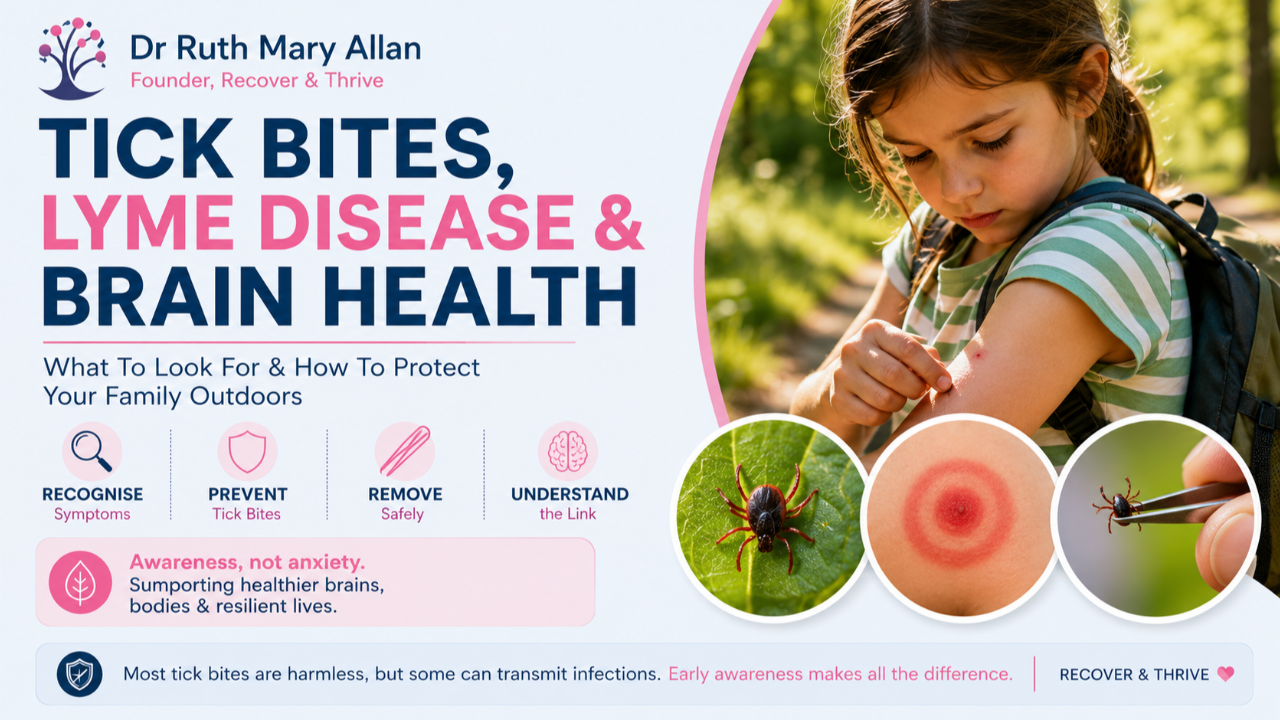
Key takeaways:
- Most tick bites are harmless, but some can transmit infections such as Lyme disease.
- Symptoms can include rash, fever-like illness, fatigue, joint pain, headache, neck stiffness or brain fog.
- Prompt removal, prevention and symptom tracking are sensible - especially for children and outdoor explorers.
- This is about awareness, not anxiety.
Today, after a weekend away outdoors, I found a tick attached to my daughter’s upper arm.
To be honest, my first reaction was not calm clinical perfection.
It was panic.
She had suddenly noticed it, became distressed and was trying to scratch it out herself.
"Mummy there's a bug on my arm," came the cries as she was getting dressed for school, "I can't get it off."
In that moment, calmly heading downstairs to locate the proper tick tweezers simply was not realistic. So I used my fingernails - essentially acting as improvised tweezers - and removed it as quickly and carefully as I could.
Afterwards, once the adrenaline settled, I found myself reflecting on how easily these situations happen.
Like many children, she had spent the weekend exactly as children should: running through long grass, playing hide and seek in woodland, climbing, exploring and embracing adventure.
At one point - (not under my direct supervision!) - she had also decided stroking a dead rat was an excellent life choice.
Parenting keeps you humble.
We cannot know exactly where the tick came from. It may have been the bracken in the woodland, the long grass, nearby wildlife or another outdoor environment entirely. But the experience reminded me how important awareness is - particularly as ticks are increasingly being discussed across the UK in relation to outdoor activity, Lyme disease and longer-term health.
Most tick bites do not result in Lyme disease, and many people recover fully with prompt treatment when infection is identified early.
Importantly, this article is not about fear.
It is about awareness, prevention and sensible action - especially when we think about inflammation, nervous system health and brain function. In all the times I've spent outdoors, walking through bracken, sleeping in or near woodland, crawling through undergrowth and across the ground during military training, I've never had a tick bite, so the experience brought this into focus.
What are ticks?
Ticks are small spider-like parasites that feed on the blood of animals and humans.
They are commonly found in long grass, woodland, bracken, heathland, moorland and areas where wildlife such as deer are present.
Ticks can be extremely small, particularly in their immature “nymph” stage, which means many people do not notice them immediately.
Why do tick bites matter?
Most tick bites are harmless. However, some ticks can carry infections, including bacteria that may cause Lyme disease. Lyme disease is caused by Borrelia bacteria and is the most recognised tick-borne illness in the UK.
When recognised early, treatment is usually highly effective, which is why awareness matters more than panic.
Symptoms to watch for after a tick bite
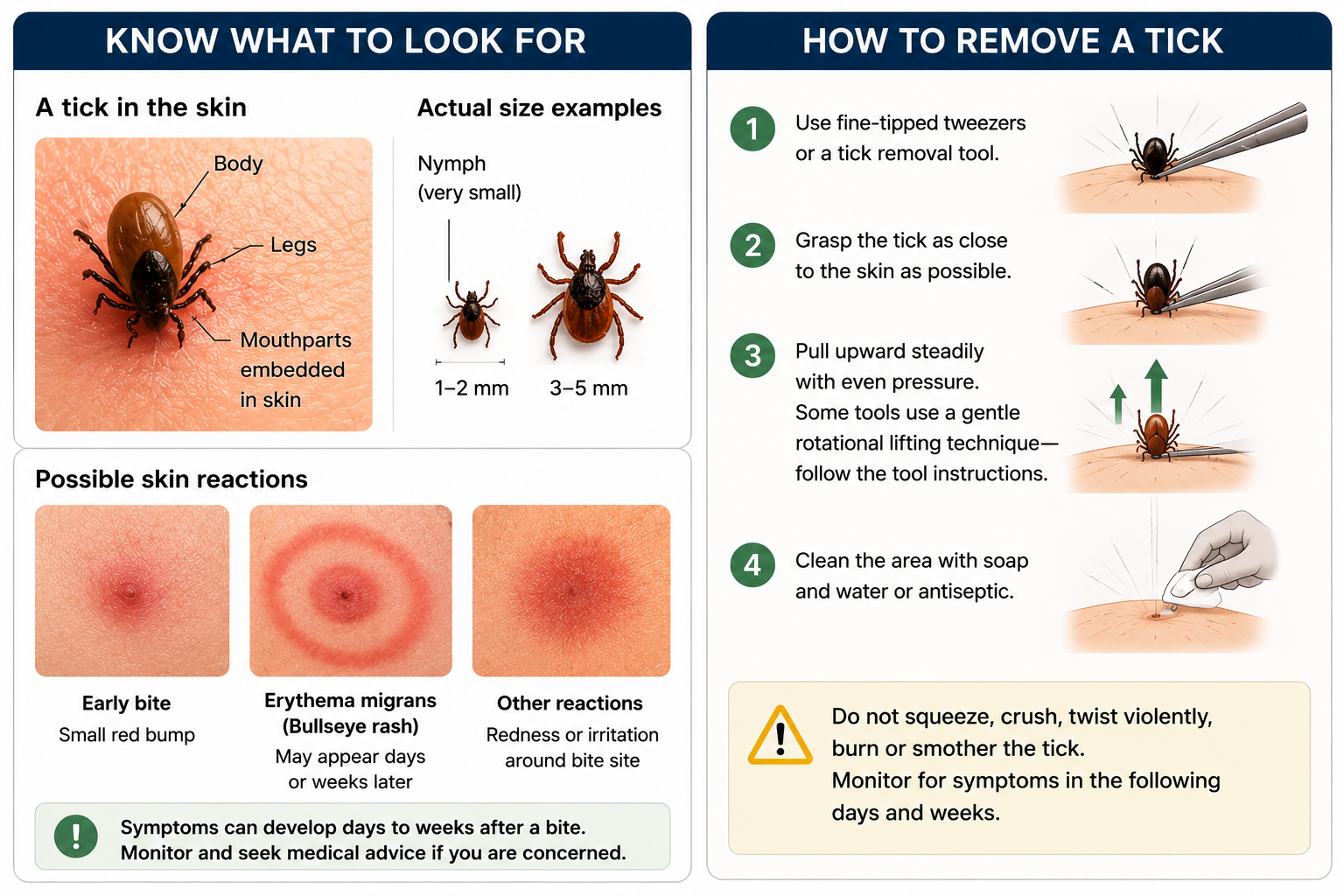
One of the best-known signs of Lyme disease is the classic expanding “bullseye” rash, known as erythema migrans.
However, not everyone develops this rash - and it may look different depending on skin tone and individual immune response.
Other possible symptoms may include:
- fatigue,
- headaches,
- fever-like symptoms,
- muscle aches,
- joint pain,
- swollen lymph nodes,
- neck stiffness,
- facial weakness,
- numbness or tingling,
- or brain fog.
These symptoms can easily be mistaken for a viral illness or simple exhaustion.
When should you seek medical advice?
Seek medical advice if you or your child develops symptoms after a tick bite or after spending time in areas where ticks may live.
This includes:
- an expanding rash, especially one that spreads over days or weeks,
- fever or flu-like symptoms,
- severe or worsening headache,
- neck stiffness,
- joint swelling or significant joint pain,
- facial weakness,
- numbness or tingling,
- or persistent, worsening or unusual symptoms.
If you seek help, tell the clinician about the tick bite or possible tick exposure, including the date and location if you know them.
The brain, inflammation and nervous system connection
One of the reasons this topic interests me professionally is the growing understanding of how inflammation and immune activation can affect the brain and nervous system.
This is not unique to Lyme disease.
We are increasingly seeing research into neuroinflammation, autoimmune brain disorders, post-viral syndromes, Long COVID, PANS/PANDAS, immune dysfunction and the relationship between inflammation, cognition and mental health.
The brain and immune system are deeply interconnected. When the body is under inflammatory or infectious stress, some people may experience symptoms affecting concentration, memory, mood, sleep, energy, emotional regulation and cognitive performance.
This does not mean every case of fatigue or brain fog is caused by Lyme disease.
Far from it.
But it does reinforce a broader principle I discuss often through Recover & Thrive: brain health cannot be separated from whole-body health.
Sleep, stress, inflammation, nutrition, immune function, trauma, environment and nervous system regulation all interact continuously.
What should you do if you find a tick?
First: do not panic.
Remove the tick as soon as possible using fine-tipped tweezers or a proper tick-removal tool if available.
Grasp the tick as close to the skin as possible and remove it steadily, avoiding squeezing or crushing the body of the tick. Different tick-removal tools work slightly differently, and some use a gentle rotational lifting technique. Follow the instructions for the specific tool you are using.
After removal:
- clean the skin with soap and water or antiseptic,
- monitor the area for a rash or irritation,
- consider photographing the bite site,
- note the date and location of exposure,
- and seek medical advice if symptoms develop.
Preventing tick bites while still enjoying the outdoors
The goal is not to stop children exploring, climbing trees, building dens or disappearing into woodland adventures for hours at a time.
Outdoor play is hugely important for brain development, emotional resilience, nervous system regulation, physical health, confidence, creativity and family connection.
But awareness and a few simple precautions can reduce risk significantly without removing the joy of being outdoors.
- Check skin after outdoor activities. Ticks are often found behind the knees, around the groin, under the arms, around waistbands, behind the ears, along the hairline and on the scalp. Children often will not notice ticks immediately, so regular checks matter.
- Shower after time outdoors. Showering soon after outdoor activities may help remove ticks before they fully attach. It is also a useful opportunity to check skin carefully.
- Wear appropriate clothing in higher-risk areas. When walking through long grass, bracken, dense woodland or deer-heavy environments, consider long trousers, covered ankles, socks over trouser bottoms and light-coloured clothing so ticks are easier to spot.
- Use insect repellent where appropriate. Tick repellents containing ingredients such as DEET or picaridin may help reduce risk. Parents should follow age-appropriate guidance and manufacturer instructions.
- Check pets as well. Dogs and outdoor cats can bring ticks into the home, so checking pets after walks is important too.
- Carry a tick-removal tool. After my recent experience of improvising with fingernails while my daughter panicked in our bedroom, it was a great reminder of the importance of keeping proper tick-removal tools available in your house, as well as in first aid kits in your backpack and car. I will now be adding one to our bathroom draw.
Preparation is much easier than trying to think clearly while your child is distressed.
Tracking tick exposure and symptoms
One practical thing I will be doing is logging this as a health event in my child’s health profile. This will include:
- the date of the bite,
- where we had been,
- where the tick was attached,
- how it was removed,
- whether it appeared engorged,
- any photos of the bite area,
- and any symptoms over the following days and weeks.
This is not about becoming anxious or over-monitoring. It is about having a clear record if symptoms appear later and medical advice is needed.
Awareness without anxiety
Ticks are part of the natural outdoor environment. The answer is not fear or avoiding nature. It is simply awareness, sensible precautions, early recognition and calm action when needed.
The outdoors remains one of the best places for children and adults alike to build healthier brains, stronger bodies and more resilient nervous systems.
Further reading
You may also find these conversations helpful:
- What Psychiatry Training Never Taught Me About My Kid’s Brain Health
- How to Recognise and Recover from Autoimmune Brain Disorders
- Staying Alive in Toxic Times with Dr Jenny Goodman, MA MBChB | E51
- Getting Healthy in Toxic Times with Dr Jenny Goodman, MA MBCHB | E99
Useful clinical resources
Final thoughts
Finding a tick attached to my daughter was a useful reminder that these situations happen easily - even if you spend a great deal of time outdoors and know what to look for.
As both a parent and someone deeply interested in brain and nervous system health, it reinforced something I believe strongly:
small inflammatory and environmental stressors can matter more than we sometimes realise.
Not because we should become fearful. But because paying attention early, supporting resilience and understanding the connection between the body and brain allows us to respond more intelligently to health challenges over time.
And ultimately, that is what Recover & Thrive is about: helping people build healthier brains, healthier bodies and more resilient lives.
Save this tick bite guide
Download this quick-reference infographic to keep in your first aid kit, save on your phone or share with family and friends who spend time outdoors.
This article is for information only and does not replace professional medical advice. If you are concerned about a tick bite or develop symptoms, speak to your GP or appropriate healthcare professional.


